


Nailed Furniture in the Wild
One of the things that stuck with me during Adam Cherubini’s Nailed Furniture seminar at Woodworking in America this year was his statement that this furniture is all around us. You don’t need a fancy museum or high end antique dealer to get up close to view it. All you need to do to learn more about it is keep your eyes open.
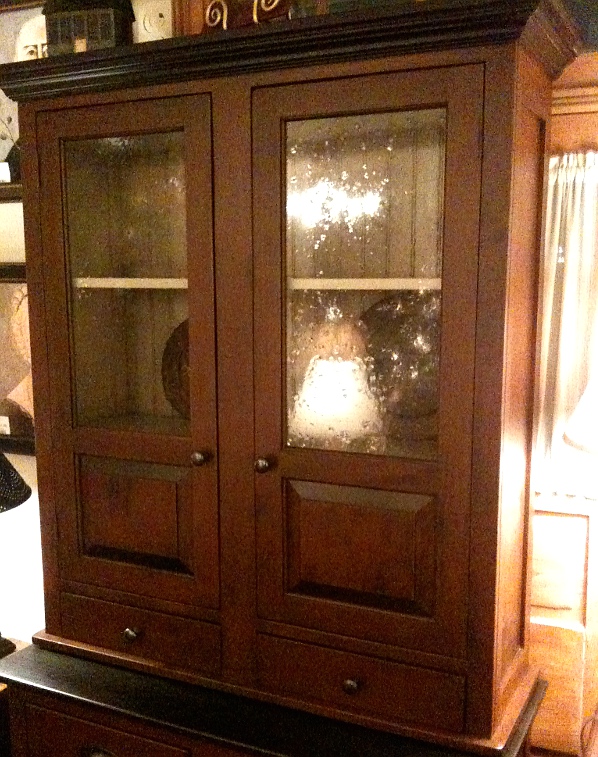
Dados, Rabbets, and Grooves are the only joinery on this piece
The Friday after Thanksgiving I was up in central Pennsylvania with my family. It seems that every small shop I entered presented me with examples of nailed furniture. Some of this blurs the lines a bit as you will find mortises and tenons (or at least stub tenons and routed grooves) in the doors, but in every example I found nailed face frames, tongue and groove or shiplap panels, and dado/rabbet carcass construction. These are all modern made pieces so you won’t find any cut nails here but the construction technique is the same.
Personally, the country style of these pieces doesn’t appeal to me, but the principles behind them are intriguing. Simply made furniture that can act as a blank slate for further design embellishment. A beginning woodworker could very easily put together any of these pieces with minimal tooling and in just a few hours work. The adventurous woodworker could add inlay, moulded accents, shaped tops, curved legs, raised panels, wood variety, interesting hardware, or many other things to dress up the pieces and add some style.
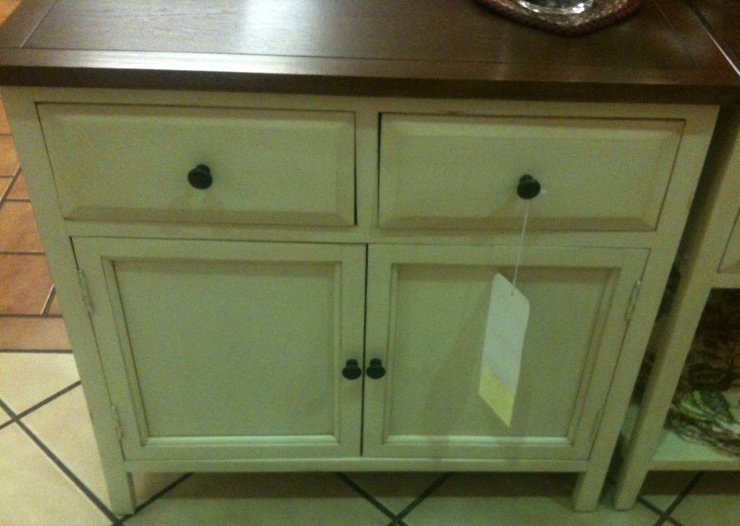
Faux frame & panel doors have rails and stiles nailed to a plywood panel
The Hutch seems to be the poster child of this construction method and everywhere I turned, I saw another example using simple joinery, and honest Pine or Cherry. All the drawers I saw were rabbets reinforced by nails and what at first appeared to be thick corner posts were merely a nailed face frame on top of a solid case site with “feet” cut into it. If you pair the two pieces pictured in this post together you have the makings of a hutch. Usually the top is stepped back from the wider bottom and it can be open shelves or enclosed by doors.
The above piece has what appears to be frame and panel doors. On closer inspection, the rails and stiles are actually nailed to the back panel which I assume is plywood. Certainly there are more “elegant” ways of building this piece with mortise and tenon, sliding dovetails, and through/half dovetails, but this method does show an a quick alternative that can yield a nice looking piece.
The top piece pictured here is an example of what a raised panel, glass and crown moulding can do to dress up the overall impression, but the joinery is the same. Perhaps this suits your style perfectly and you’re good to go. But if you are like me and enjoy spending time on the details and decorative elements this simpler construction can get you there much faster.
Is it as durable? Will it be an heirloom piece? Probably not, but I’ll bet that most woodworkers I know would engineer a piece that would last beyond their lifetime. Personally I know that getting it out of the shop and into use faster will help my marriage last a long time too.
