


The French Feet Start to Take Shape
Now that I have the grain aligned for the best strength it is time to begin cutting the feet to size and mitering them into the typical bracket foot. I need a 90 degree edge on this parallelogram so I clip off the back edge of the blank using the miter gauge at the table saw. 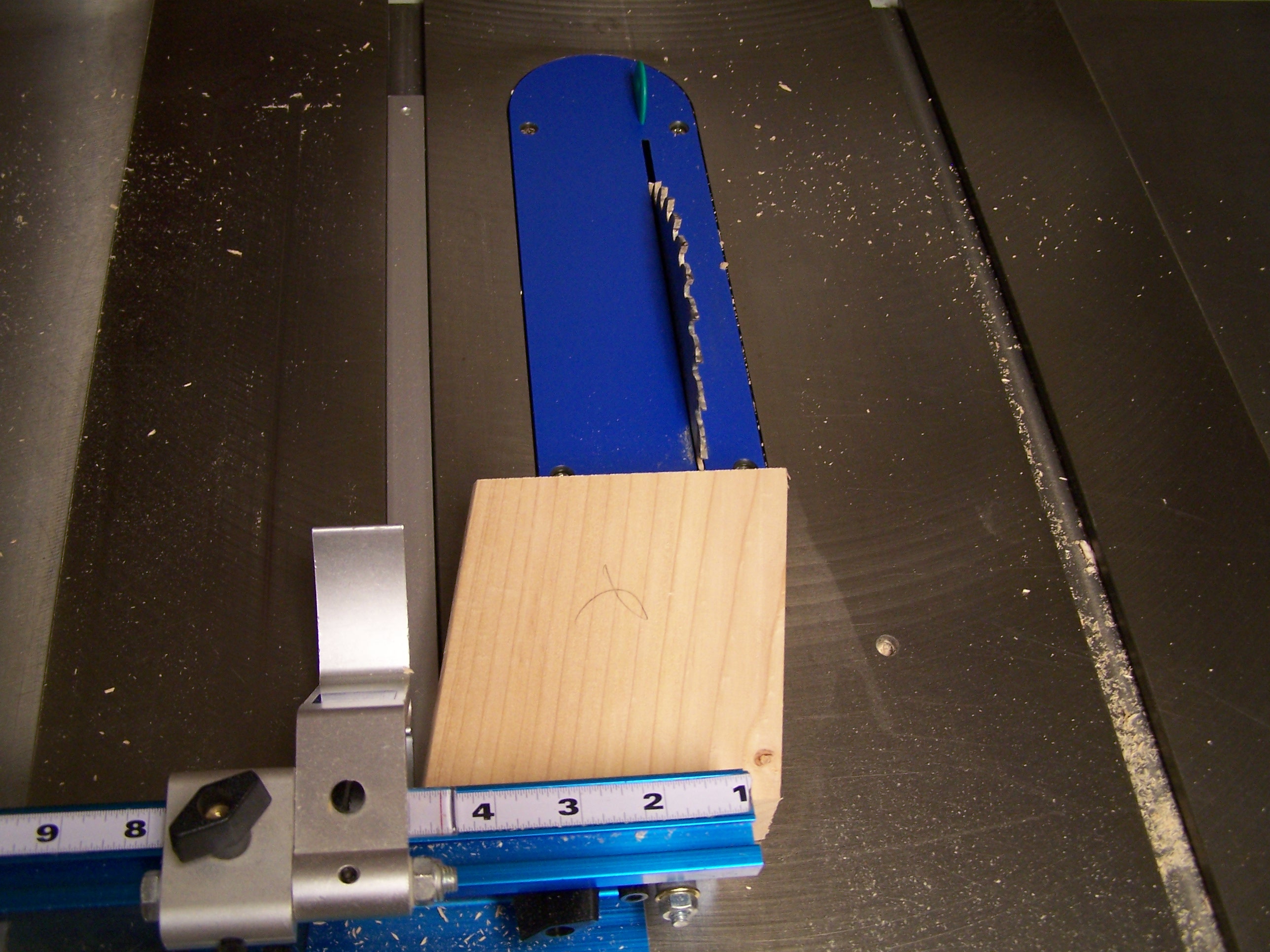
This cut is imperative because now I have the two joinery faces where the foot meets the case and the front trim, flat and square.
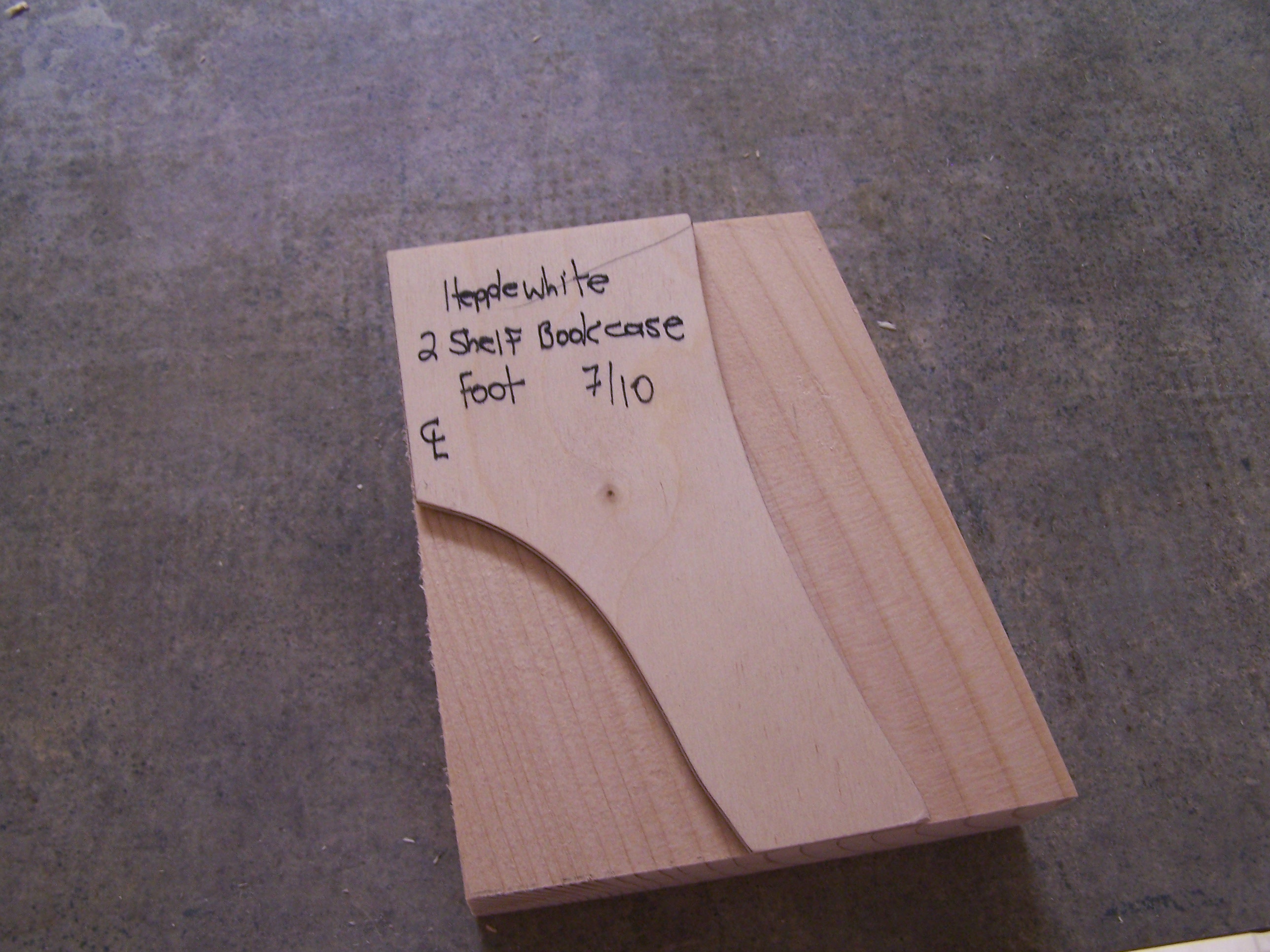
Now I’ll use my square to strike a line to define the front edge of the foot.

I want this front edge square for now and I will bandsaw the curve later after the glue up when I have a bracket foot. So it’s over to the table saw to cut the 45 degree miter.
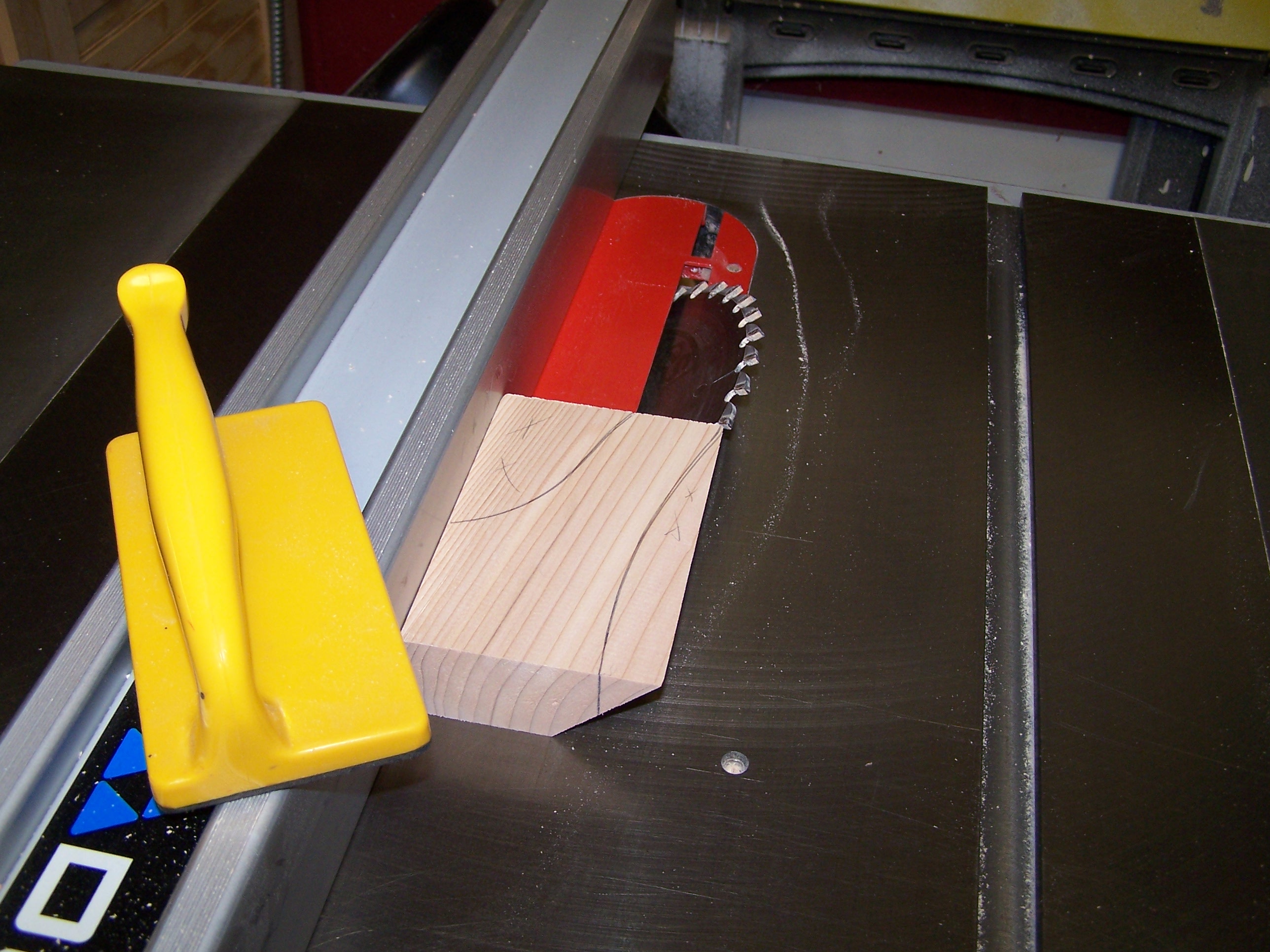
Cut the bulk of the waste then creep up on the final fit
These cuts are best done by hacking off the bulk of the waste then trimming the last 1/16 or so with a light pass for a good glue surface. Or if you like, take the piece to your shooting board and clean it up there for a tight fit.
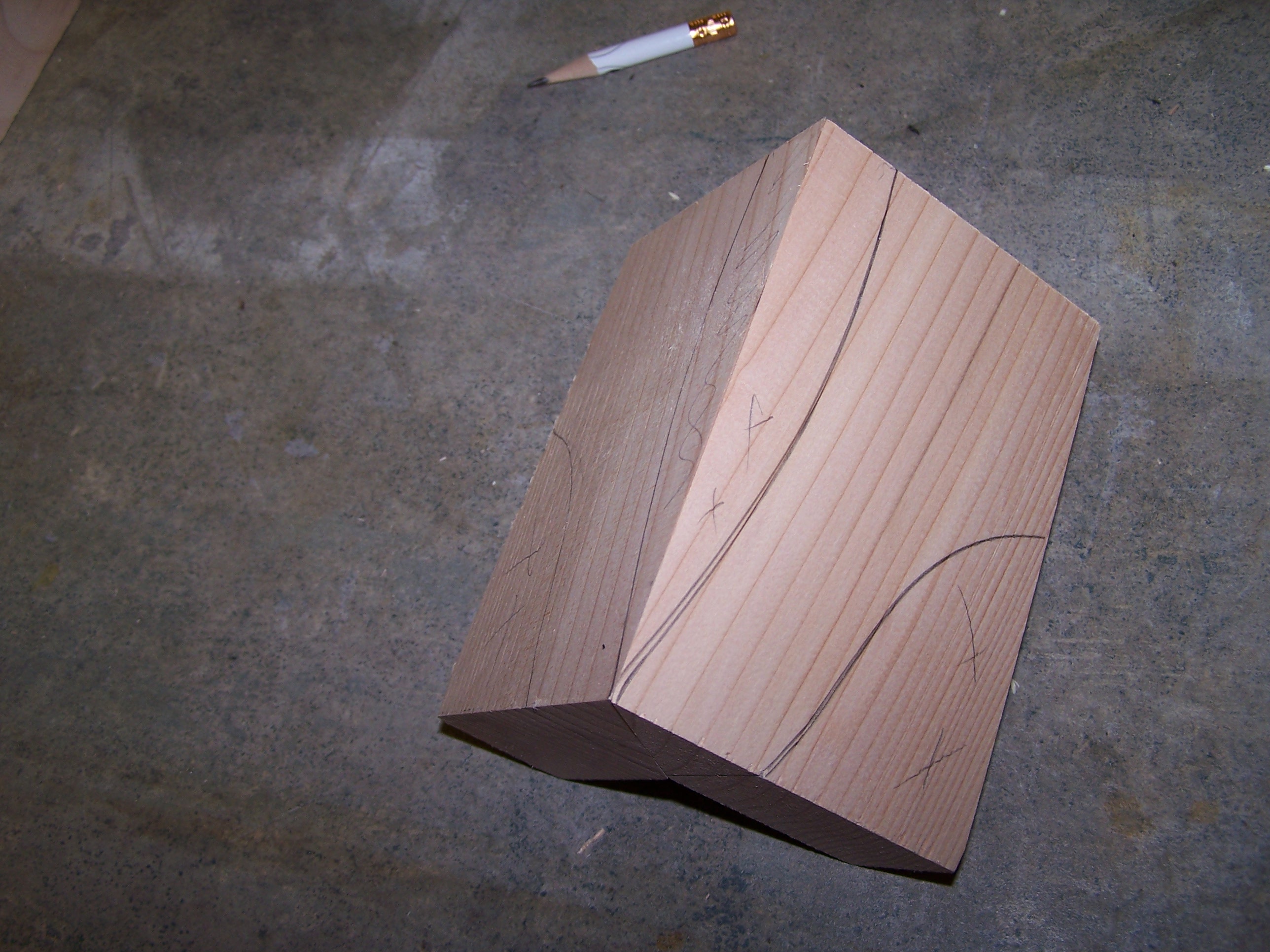
I’m about ready to glue these into bracket feet, but first I have to cut the inside profile of the foot because I won’t be able to get to it easily after the glue up.
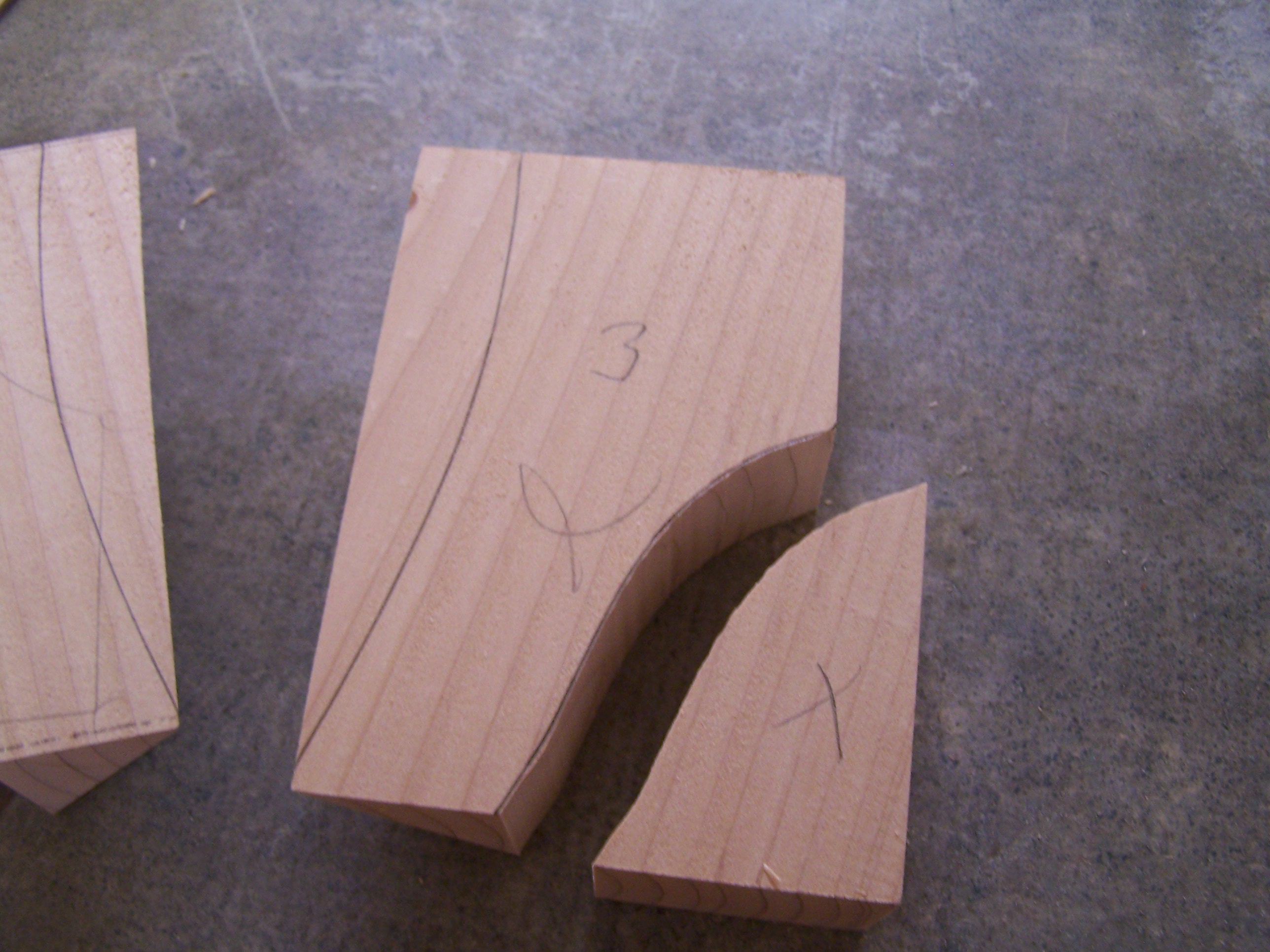
Make sure to cut the inside profile before gluing
Now to glue them together. I bind the mitered edge with packing tape, slather on the glue, then clamp the assembly together with these great industrial strength rubber bands that I got from Rockler several years ago. They have become probably the most valuable clamp I have in the shop due to their flexibility (rim shot) with odd shapes.
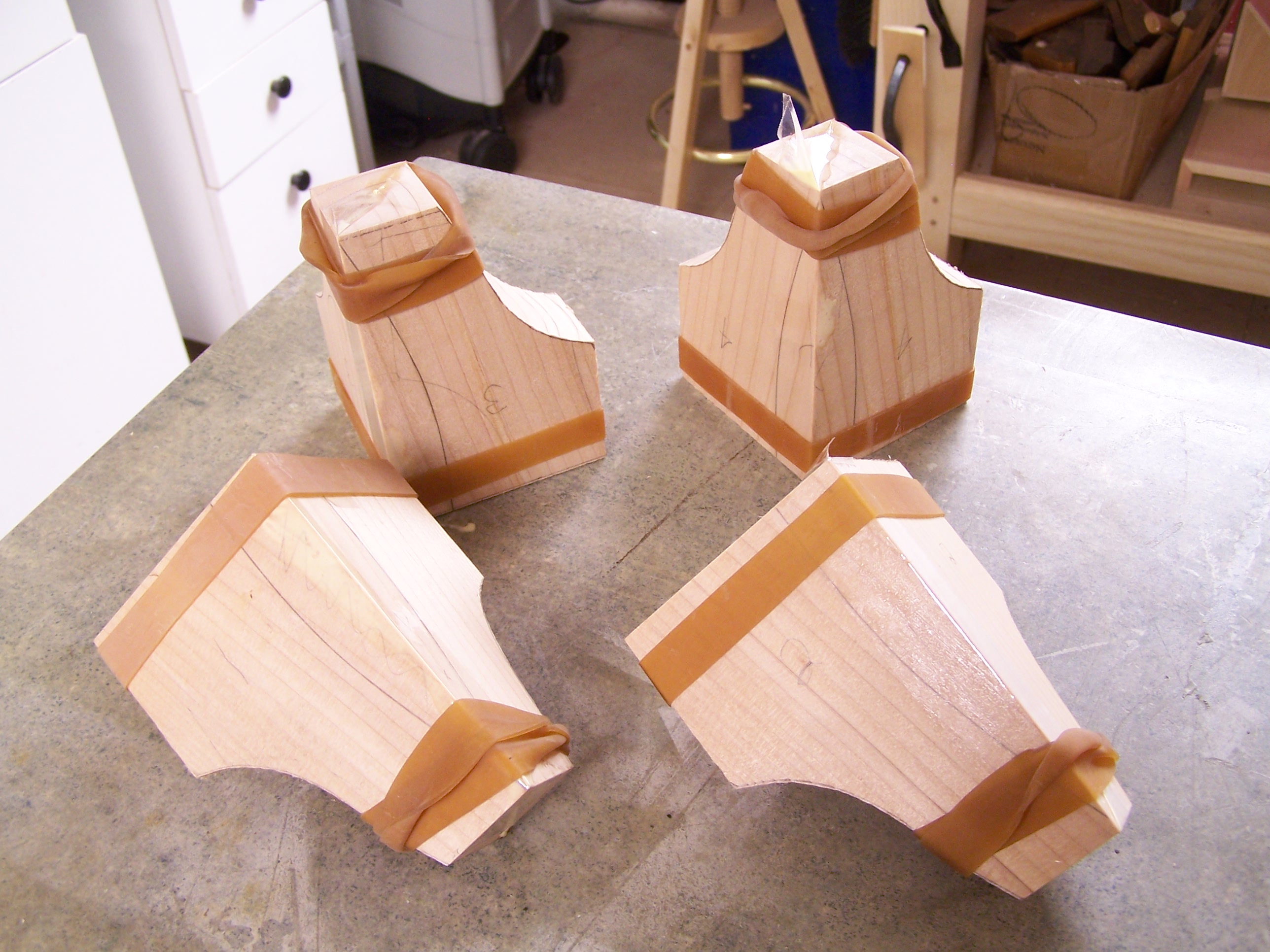
Glued and Cooking
Next time I will cut the outer profile to complete the feet.
To my loyal podcast subscribers, as you can see I am getting into the shop but really no more than 20 minutes or so at a time so I have decided to blog this build rather than film it to prevent a long lag of no content at all. I hope you enjoy it and I will get the camera rolling again shortly.
