


The World’s Simplest Hand Tool Jig
Why is it we modern woodworkers feel the need to add bells and whistles to everything? We have jigs that took more time to build than Townsend took to build a secretary. I guess we have too much information and too much time on our hands when you are not concerned with running out of light to work in and surviving the winter.
 So I blame my modern conveniences for complicating what should be the world’s simplest woodworking jig. In The Joiner and Cabinetmaker, Christopher Schwarz makes an allusion to a simple jig endorsed by Robert Wearing in his Making Woodwork Aids & Devices
The jig is called a mortising board, and it is used to provides support to your workpiece while chopping mortises where they should be chopped: on the bench top, not in the vise. I don’t care how strong your vise, when you bear down with mortising chisel and mallet, the piece will shift and probably scratch while shifting within the jaws of the vise. I personally believe that you introduce a lot of stress to the screw and/or the mounting screws of your vise by beating on it like this. The ideal place for chopping mortises by hand is on top of the bench right over a leg.
Wearing’s mortising board is simply that, a board that is clamped in a face vise to which you can clamp your workpiece. In Making Woodwork Aids & Devices
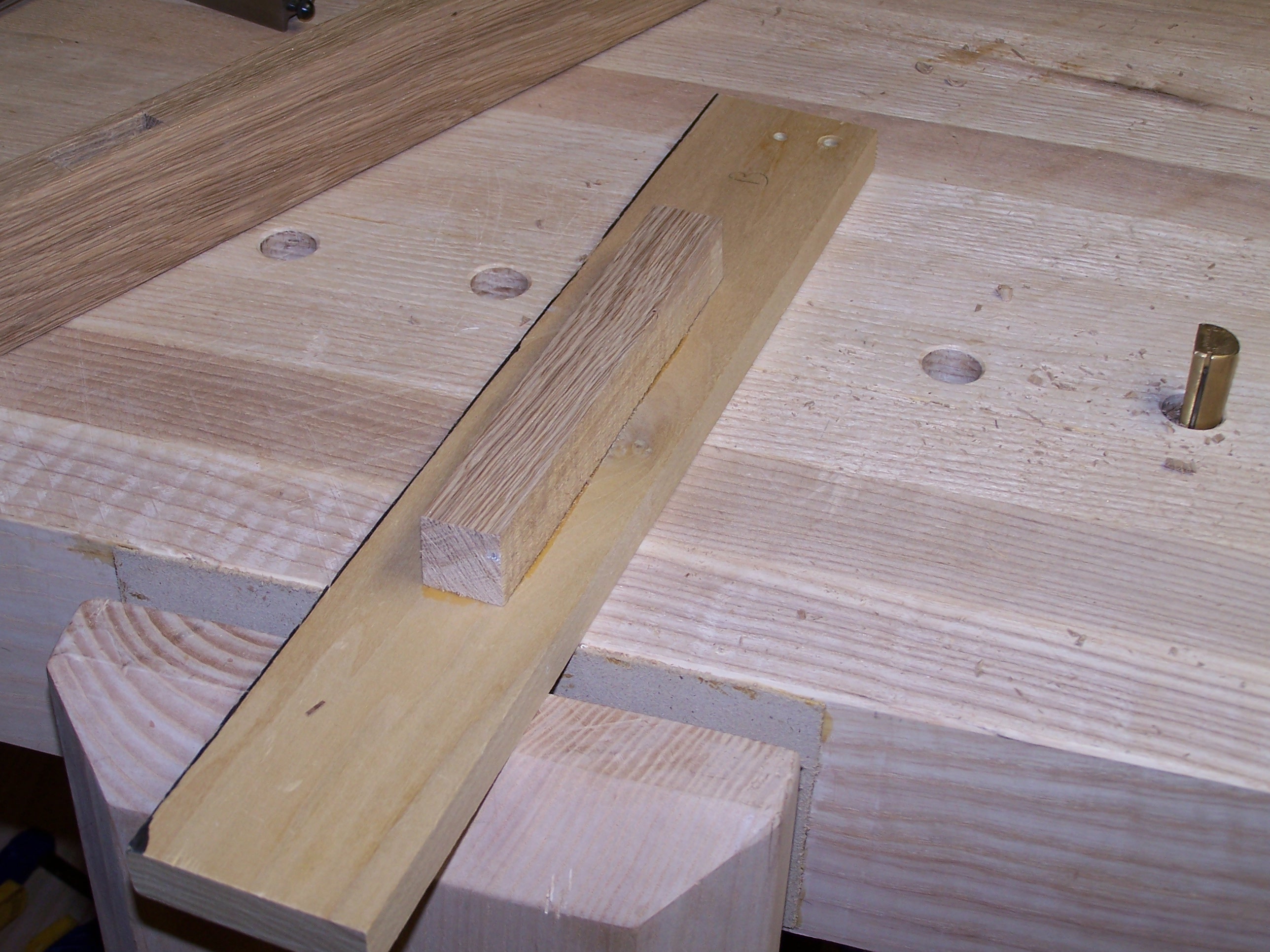
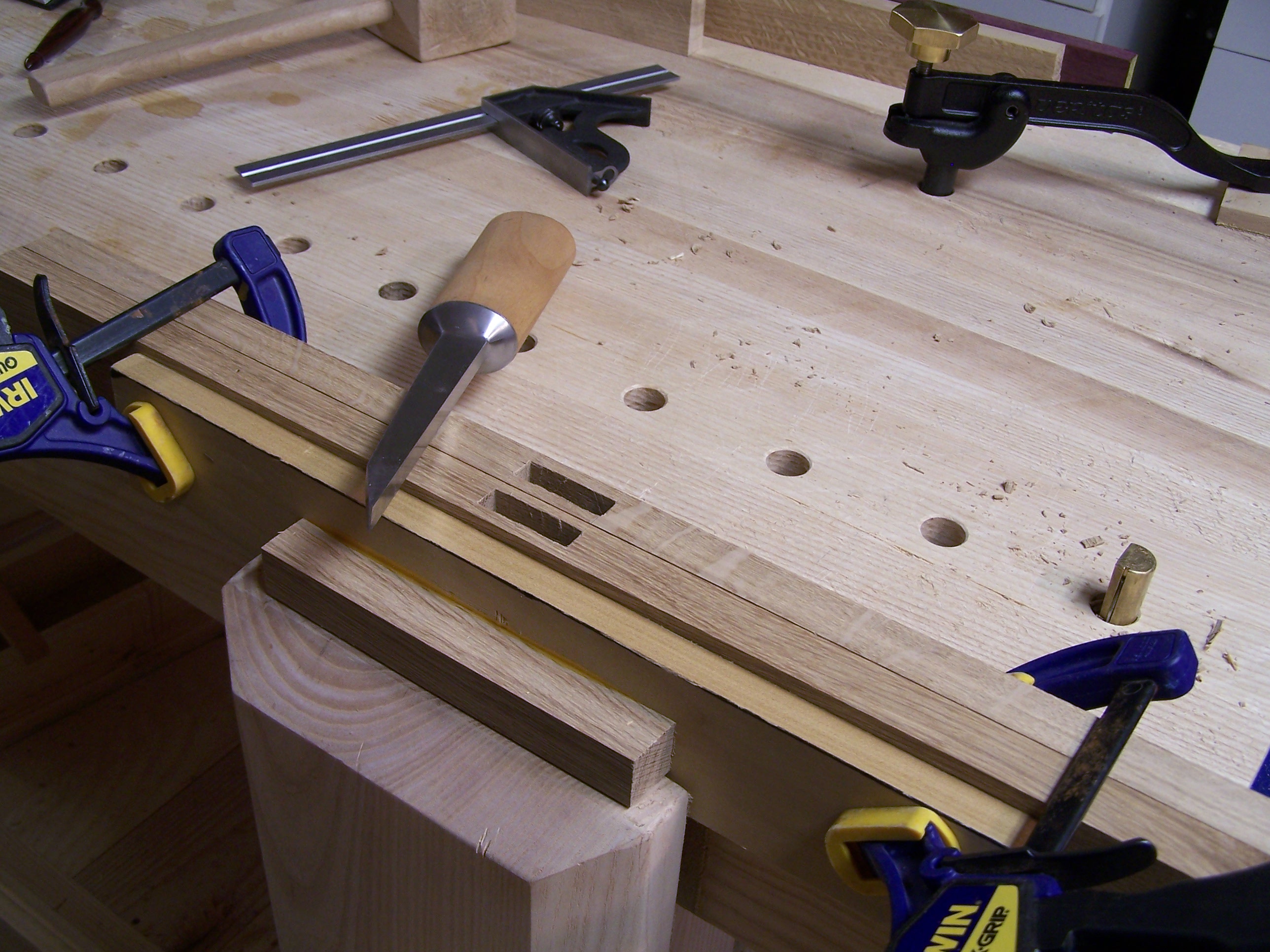 I decided to make it easier and more complicated at the same time. I took a piece of Poplar and glued a pen blank sized scrap to the back. I offset the scrap a little. Now I drop the mortising board into my leg vise and the scrap hits the chop preventing it from dropping any further. The offset allows either 3/4″ to project above the bench top or when flipped 180 degrees it allows 1 1/2″ to project above the top. I then run two quick clamps across to anchor my work piece in place. Because I have a leg vise, my chopping is now centered directly over the leg, providing the most solid surface on the bench. I can flip the board depending on whether I am mortising into thinner stock, or working on a thick leg type piece. This “jig” is fast to employ and it really makes a big difference when you are not chasing the board around the top. I can rest easy that I’m not damaging the piece or sending my leg vise to an early grave too.
What jigs to you use with your hand tools? Do you insist on putting your own stamp on them too?
