Woodworking Isn’t Rocket Science

I try not to rant on this blog, but if I can’t rant on my own blog then where can I? Woodworking is not rocket science. There is no one way to do something nor is there a wrong way (assuming it is safe). Techniques change from project to project and year to year not so much because one was better than the other but because that method suited the individual woodworker or project better.

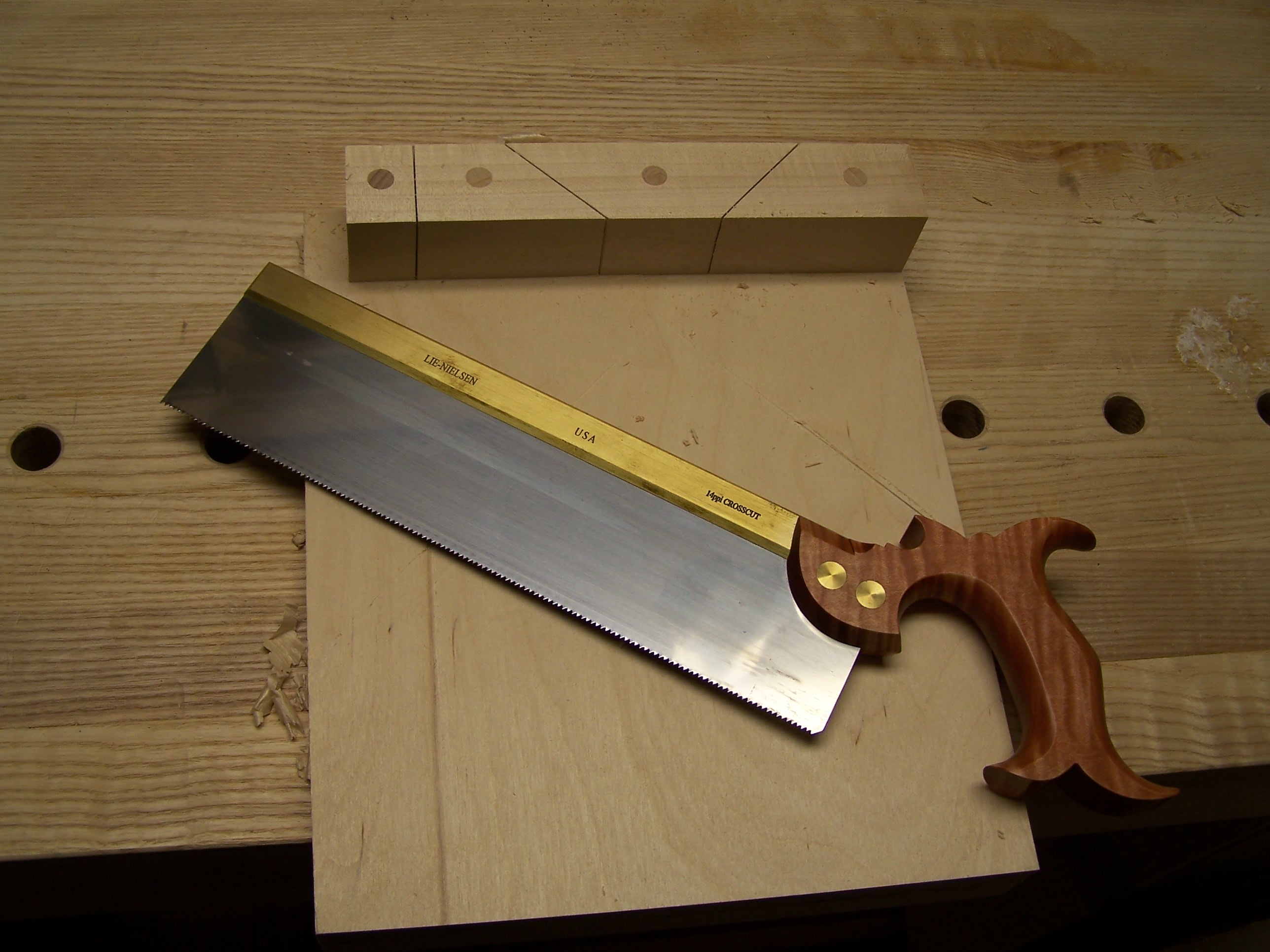
As an example, I own 2 very nice tenon saws and they have cut many a tenon cheek. Lately however, they sit in my saw til as I am splitting out all my tenon cheeks and paring to fit. Is splitting tenons better than sawing them? Have my experience points reached the point where I level up and now have tenon splitting skills? None of the above. I do think my chisel handling skills have improved to the point where I feel confident in paring a tenon cheek to a piston fit. I find this to be not so much faster or even really more accurate than other methods (router plane, rabbet block, etc) but it is more convenient. I saw a shoulder, split with a chisel then pare using the same chisel. I don’t have to reach for a different tool or even adjust the workpiece in my vise. I haven’t clocked it but it feels more efficient and frankly I like paring. Maybe you disagree, and thank God for that, because the options for cutting joinery is one of the things that makes woodworking interesting. It also gives us options for the times when your preferred technique just won’t work. I still have tenon saws and I’m confident in my sawing accuracy that I can fall back on them when that time comes. It will come.
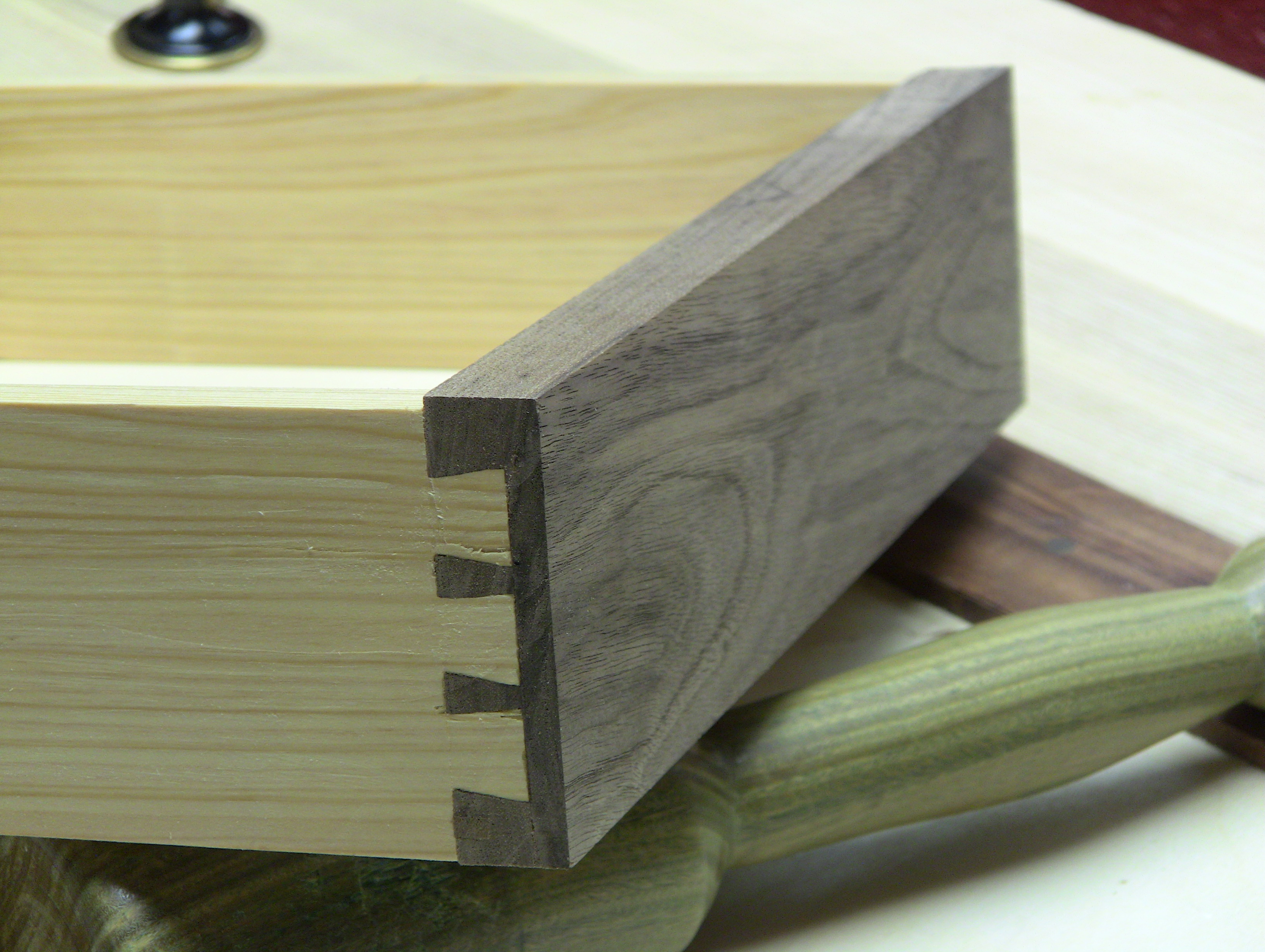
Half Blind Dovetail DrawerI think the worst reason for doing something (or teaching it) is because that is the way you were taught to do it. Chuck Bender taught me how to cut tight dovetails pins first with just a saw and a chisel. Today I cut them tails first and use a fretsaw to quickly remove the waste then pare to the line. I told you I like paring. There is nothing wrong with pins first and one look at Chuck Bender’s dovetails will tell you that obviously the way he does it works great. I even tried Allan Breed’s method for cutting dovetails. It was a mess and though I’m sure I would get better with more practice holding the saw the way he does, that method just isn’t for me. I did learn a new way to wield a saw and someday that may come in handy. I know why I like to cut dovetails that way I do and I know why I don’t do it other ways. Sometimes this is a very personal reason other times it has to do with the environment (work holding, tools available, hand/eye dominance, lighting, etc). The point being that understanding why one methods works for you is more important.

Where is all this coming from? Ever since I launched the Hand Tool School, I have been getting a steady barrage of flak coming my way. Who is this guy? Where did he train? Is he a professional? How long has he been woodworking? How is he qualified? Some of it comes from individuals and some of it from the woodworking “establishment”.

I’m tired of trying to justify my methods and my background. Have I built as much as a cabinetmaker of 30+ years? Of course not! Do I have access to more knowledge and techniques in multiple formats now than when that veteran started working? Absolutely! This allows me to try many different techniques and learn how they work. Has woodworking changed significantly in the last 2000 years? Nope! It all boils down to a few techniques: how to saw to a line, wield a plane, and use a chisel. Every task you encounter breaks down to these 3 things in some shape or form. Does accurate sawing require 30 years to master? I wager that many of us have a solid grasp on it after a weekend spent dimensioning parts for a single project. Same thing with planing. Force yourself to not use the power planer and jointer and you will be surprised just how quickly you are able to flatten a board out of necessity. Now add those power tools back in and your job just became that much easier.

I haven’t been working wood for 30 years yet somehow I managed to take Walnut from rough sawn boards to flat and square on 6 sides to a box with gap free compound dovetails in 5 hours of work this weekend. Does this make me a savant?  Hell no! I just did it using sawing, chiseling, and planing skills. I’ll say it again, this isn’t rocket science folks. There are some very basic skills that underlie everything we do. Understanding these skills will make you a better woodworker and I don’t think it takes 30 years. Heck it doesn’t even take a year. Accept that every new project will present a challenge and virgin territory. But each challenge breaks down to those basic skills. That’s what I’m teaching at The Hand Tool School and I have scores of emails and images from happy members who are thrilled with how their projects are turning out after just a single week or month of woodworking.

Let me put it to you another way.  I have formal training as a musician and pieces of paper hung on my wall certifying that.  I have more than 30 years of experience singing and performing in front of large crowds. Does this mean that I can pick up a brand new piece of music and be performance ready in seconds? Probably not, but I can do a passing job by falling back on my core skills of sight reading, music theory, and my understanding of the anatomy of the human voice. None of these things have changed since I learned them 30 years ago but I still apply them every time I am confronted with a new piece. Every now and then I meet a new challenge when I’m forced to hit that high B flat on an open vowel at full voice and sustain it for 8 beats (not an easy feat for a Baritone). I fall back on my basics, prepare my breath, modify the vowel, raise my soft palate, bounce the sound off my hard palate to make it ring. In other words, I saw to the line and pare it to fit. If you had asked me how I would handle that B flat 29 years ago, I would have told you the same thing…and I would have done it just as successfully then as I would now. (I have the recording to prove it)  What have my 30 years of experience done for me?  Filled my head with songs and qualified me to play older parts when I audition for a show.

So question my ability to teach woodworking all you want, I’m just going to keep applying the same fundamental skills over and over again, changing my technique to suit my needs, and building stuff.


Your Turn

What is the most complicated woodworking task you can think of or that scares you the most?  I’ll bet you can break it down to a few simple skills.

22 Responses to “Woodworking Isn’t Rocket Science”

Read below or add a comment...

  1. Preach it brother! I know exactly what you mean and every time I hear the “establishment” rail against folks like us, it makes me laugh. Treating our craft as if you need a doctorate to teach others is just silly. But I suppose if your business model relies upon the public perception that you are the end all be all source, it might be in your best interest to push that line of thinking. In other words, “If it doesn’t come from us, you can’t trust it!”

    The great thing about woodworking is that it’s incredibly fun and easy to pick up. But like any other craft, it is difficult to master. As you say, a weekend of practice could probably get you 75% of the way there. But you can spend your entire life pursuing the remaining 25% if you choose to. The great thing is, once you have that 75% in your pocket, you can make an amazing array of furniture and other wood items that will delight and amaze your friends, family, and clients. The remaining 25% simply becomes a pursuit of personal passion. And sure, it would be nice to get training directly from the folks who are on that final 25% stretch, but they aren’t exactly accessible. But when they speak, we listen. Does that mean that other folks shouldn’t step in and help bring the general populous to that 75% point? Heck no! Not only that, thanks to current technology, the door is now open for new independent instructors to step in who are more interesting, more passionate, and yes, less experienced than their predecessors.

    I also studied for a 4-year degree and although it wasn’t rocket science, it sometimes felt like it. All four years of that education were necessary to have a basic working knowledge of the topic at hand. So let’s make no mistake about it: this is not that. A motivated self-starter can become a competent woodworker in his/her spare time on weekends. So while we should always have great respect for the masters of our craft, let’s not step on the toes of the folks who are primarily responsible for bringing in a large chunk of the next generation of woodworkers.

    • Shannon says:

      Thanks Marc. Little known fact, I also have another technical degree in atomspheric physics. Also 4 years (at least) required just to get started. Ironic that neither of us pursues these as occupations anymore eh?

  2. Brian C. Brazil says:

    Something I have been pondering a lot recently is why hobbyist woodworkers are obsessed with efficiency. This is my hobby. This is how I spend my free time. The rest of my life is obsessed with efficiency, so when I get into my shop, I prefer to be inefficient. (Heck, if I wanted efficiency, I’d just go buy furniture)

    But that led me to thinking about why hobbyist woodworkers want to learn from professionals. If I was a professional furnituremaker, I would approach things very differently. My goal would be to get quality work done as quickly as possible. I certainly wouldn’t try something new just for the sake of trying something new.

    My goal in woodworking, as a hobbyist, is to enjoy the time I spend in my shop. Why, then, would I want to learn from someone whose goal is to get it done as quickly as possible?

  3. This is common in all fields. It is natural for folks with multiple decades of professional experience to feel like that is what is required to teach a subject. While it certainly doesn’t hurt to have that experience, it is far from a requirement. I have seen more examples than I can count of a person in a field (nothing specific here) who had 30 or more years of experience in that field, and knew all there was to know about it, who could not teach the simple basics of it.

    In most fields, whether they be trade, tech, or otherwise, there are those who excel at doing, and there are those who excel at teaching. Very rarely do you find an individual who excels at both. Many professionals at the top of their field are extremely bad teachers. I’ve experienced this first hand. On the other hand, many of the best teachers are only mediocre when it comes to their skill in the trade. Where they excel is in their ability to communicate, break down and explain things to make them understandable to a student so that student can go and try what they are being taught without any question as to what it is they are striving to do.

    For my money, in a field like woodworking, I’d rather have the best teacher who is only a mediocre woodworker than the best woodworker who is incapable of passing on their know how. Decades of experience may make one a top professional, but they don’t necessarily make them a great teacher. Teaching is a different skill set entirely.

    • Shannon says:

      Agreed Bob and to go a step further to include Brian’s point. Those that were pro may teach methods that don’t “speak” to the hobby woodworker who finds the journey to be just as much fun as the destination. From another perspective, I am a terrible voice teacher (not that I’m a great performer either) but I have a terrible time trying to explain something that is very internal for me. On the other hand my wife is one of the best voice teachers I have ever met (disregard my obvious bias). Of course she has a lovely voice too so this metaphor doesn’t really work well. Dang it!

  4. Rich Mentch says:

    All of you guys have great points. It’s not like we’re practicing medicine where we could hurt someone. We’re working at a hobby, a great one, and most of us work wood for fun not profit. Even if some of us (absolutely not me) do profit, the market judges quality, not a sort of medieval guild hall. I just don’t understand the need of some people to criticize everything they see. It shocks me to read the comments on your blog and yours is not alone. I just watched Marc’s video on his dream workshop and then read some of the comments. Really? Some guys need to make comments about air conditioners and sound quality, etc. ? I’d love to see their shops and their work, it must be out of this world, or maybe they’re just chronic complainers whose comments shouldn’t even be read, just dumped into the trash can.

    Shannon, I feel like a life time attraction to working with wood can now be pursued with the instruction that you are offering at the Hand Tool School. I’m a 30 year educator, I know something about teaching and I think you are doing a great job and service and I’d bet that most who take in your site and work feel the same. The negative commentors are making more of a comment about themselves than about you.

  5. ” The negative commentors are making more of a comment about themselves than about you.” I would agree with that 100%.

    If they keep complaining, you must be doing something right. But if you start singing during a semester segment, I may complain. ;-)

  6. Bill says:

    I would love to write a great big comment , but I think it would just be a repeat of the above comments.

    I too, have a Music Ed/Percussion Degree and 5 years Aviation Electronics experience. I do neither. I am a sign maker for the National Park Service and I have a blog and Podcast.

    I agree with you. Over the years I have been bombarded with comments regarding lack of years or experience. I always replied with quality vs. quantity makes a difference. Some people have a natural gift to work with wood. some have a gift to teach. Like Bob said , when the two come together in any area it is a special thing. Even if you had 30 years experience I think you would still get comments about not being traditionally trained. And to others, even if you were published in PopWood you still would get flack.
    I learned during my 5 years in the Marines that some people just have a chip on their shoulders and no matter what you do it will never go away. You just have to move on and think of the other people out there.

    You do a great job, don’t worry about the few that talk smack, just worry about the many that are in the same boat with you.

    So much for a short comment.

  7. Shannon says:

    Okay okay stop it folks. I appreciate the well wishes and it is touching but a pep talk was not my motivation for writing that post. I am frustrated by how difficult some mainstream ideals make woodworking and it is holding far too many of us back. I’m extremely proud of my skills and how far they have advanced since I started blogging (actually BECAUSE of blogging). This is because I forced myself to try new things and examine different methods while feeling I could build anything. I didn’t need anyone to tell me these things couldn’t be done because of my lack of experience.

  8. Right on! We all love what you do, Shannon. Keep up the great work!

  9. Brian C. Brazil says:

    I would go so far as to say I would prefer instruction from teachers with less experience.

    When you start out in woodworking, everything is difficult. But as you journey on through, you start to pick up skills and get a feel for things and just do them. Hand cut dovetails are a classic example. When I cut my first dovetails, you could drive a Buick through the gaps. Over time, I’ve whittled that down to a Fiat. But things that used to be perplexing (like “saw to the line”) are routine.

    Over time, I’m going to forget how hard it was to learn to saw straight. And I’m sure I’ll tell someone to just draw a line and saw to it.

  10. Andy Garrabrants says:

    Shannon,

    Keep up the amazing work. I love watching and learning from both you and Marc. The best thing that you do to help us is by not being the professional with 30+ years experience. I think that it is most helpful when we watch you “struggle” with the selection of the best technique or when you (as we all do) goof up a joint and have to adjust. You wouldn’t see that with many of the establishment because of the notion that these pros are above even temporary failure. It is frustrating to see a new technique that is performed flawlessly with all the fancy tools that most of us will never have because I can’t do that. I love the fact that both you and Marc are teaching basic skills and strategies that we’ll all use for the rest of our woodworking lifetimes.

    Andy

  11. Jim Hedrick says:

    Shannon, also Marc and many others, simply said, Thanks You for sharing with those of us willing to listen and learn!

  12. Jake Mayer says:

    Hi,

    Funnily enough I found your website because I wanted to make a simple box featured in the getting started in woodworking portion of the fine woodworking website. It was my first attempt at joinery with hand saw. Holy gaps Batman!!!!!! A tremendous failure. I so badly wanted to just be able to cut and or pair to a line when I was trying to make the box as a gift. Still refining that simple skill today.

    The great benefit of teaching is the learning you have to do to teach a subject. I am a physician. Part of my job is teaching and supervising others who are in training. Learning things well enough to teach them always seems to push you to a higher level of understanding and a certain deliberateness as you design and perform the lesson. I have actually thought about podcasting some projects in part because it would force me into that space that often brings out my best work. Sometimes you learn more just by the feedback you get.

  13. Badger says:

    Great post, and very good points all!

    This gets lost I think sometimes with the obsession of the modern mind which wants to machine wood rather than work it. So much of what we see every day is machined, and perfected and we develop a sense that this is the right way. When we seek to re-learn woodworking, naturally we apply this thinking to the task.

    I’ve been learning a different path, sometimes on my own, sometimes with teachers like Roy Underhill, and Jim Tolpin and sometimes just staring at a picture of an imperfect object from the past seeking to understand the maker and what decisions he made.

    Sharpening is a good example of the difference. I see all these postings in search of the perfect edge, and describing a sharpening regime to get an edge that will split atom… But that is not the point! Woodworking is about working the wood, not the tool. To me, and this is just my own opinion, sharpening is just a chore to be gotten through as quickly as possible. I use oil stones free hand and good enough is good enough.

  14. Rob Young says:

    Maybe I can give you a little different perspective. Maybe not. Anywhooo..

    I work at lot with members of my local woodworking club (guild), the Kansas City Woodworkers’ Guild as both an officer (current President) and as the “facilitator” for what we call the Hand Tool SIG (Special Interest Group). Having nearly 500 members, not everybody is interested in the same things. So we formed SIGs, sort of clubs within a club. The idea being that a smaller group that is interested in handtool work can come together and explore ideas and techniques. Likewise CNC machines, finishing, old powertool iron restoration, scroll saws, etc.

    Some how or other, I’ve gotten a reputation as one of the “hand tool guys” and take some degree of ribbing for it. And that’s fine with me, even though I’m more of an 80/20 hand to power ratio woodworker (thicknessing stock by hand and long rip cuts SUCK). I’m 99.9% self taught using various sources, primarily personal curiosity and stubbornness, I try to impart to the others in the SIG one over-arching theme: Learn enough to learn more. I’ve had several regulars from the SIG go on to take classes at Marc Adams school or The Woodwright’s School, etc and they usually come back and say how glad they were to have been pre-exposed to the basics in a hands-on fashion before heading off to various (and often expensive) classes.

    So, as I’m self-taught I try to use that as a vehicle for imparting a little bit of knowledge (“Hey guys, here is ONE way to chop a mortise. Try it for yourself and then experiment with these other methods. Then next month, we can discuss which one worked the best for you and why.”) I’ve recommended lots of on-line resources to our members and will continue to do so regardless of of how many years the “teacher” has been practicing or teaching. My only goal in pre-screening the material has been the quality of the information and its presentation. Frankly I don’t care a whit about years experience, pins-first vs. tails-first or Tormek vs. jig-free on oil-stone sharpening. What should matters to the amateur (oh and by the way, look up the etymology of “amateur” some time, it might enlighten you as to how the word should be used) woodworker is the journey, the results and the growth through curiosity.

  15. David says:

    Few people still practicing even had formal training anyway. Attending a few workshops is not the same thing as a real apprenticeship. Don’t forget the other part of it. Just because someone has 30 years experience woodworking doesn’t mean that they are a qualified teacher either. Quite often, the opposite is more likely. Generally someone working for a living at woodworking is cranking out as much volume of work as they can to put food on the table. Taking the time and explaining the process to beginners is a different world. Whether seasoned pros or amateur some teach well and some do not. Many times the amateur has more insight and knowledge precisely because they can afford to take the time that a professional cannot.

  16. Ok, I have to chime in here. It seems to me that there is a perception that you have to learn a task from “the best” to be any good at it. That’s malarky. When I finished became a pilot, my first paying job was…a flight instructor. That’s right, I had just started flying 6 months earlier and now I was teaching others how to do the same thing. When I went off to Air Force Undergraduate Pilot Training I was really excited because I thought for sure that the academics would be taught by the most seasoned aviation gods in the world. Guess who was teaching the classes? The guys who just graduated and were in that class less than a year before me. This cycle has continued throughout my career and the same holds true in many other professions. As long as the person teaching you knows the subject matter well then they are qualified to teach it to you. Is your learning over after that? No! – and more than likely neither is theirs.
    The biggest difference with woodworking is the “credentials”. It’s not a piece of paper, it’s your work. The experience you’ve gained building the pieces that make up your portfolio. If someone looks at your work and thinks “I wish I could build something like that.” then you are qualified to teach them – you may not be any good at teaching them, but that’s a completely different story.
    The really critical thing is that the instructor – or potential instructor – is clear about their experience level. Dishonesty or embellishment in this regard is where people get into trouble.

  17. Steve Branam says:

    One certainly does not have to have years of experience with a given skill to pass it on. I believe in the “see one, do one, teach one” methodology. Where does that come from? The medical field (my wife is a surgical nurse). While it’s true that surgeons have years of training, this is the way they learn to do new procedures and pass on the knowledge (though realistically they will put more study into it than just watching it once). Teaching is itself a great way to improve one’s own skill, because it forces one to really think about the details. Peer review of the results and the teaching methods further refine them. In some fields that review is formal, in some it’s informal (like the comments section of a blog!).

    A procedure requires a series of steps to be followed. Anyone who can accurately convey those steps to someone else is capable of teaching it. Knowing what the steps are, only the student can apply their own abilities to perform them well. The benefit of a more experienced teacher comes in dealing with problems that arise, where the teacher draws on that experience to overcome them.

    As Mark says, being clear about your experience is critical, so that students understand what they are getting. Then they can make an informed choice.

Share Your Thoughts

*

You may use these HTML tags and attributes: <a href="" title=""> <abbr title=""> <acronym title=""> <b> <blockquote cite=""> <cite> <code> <del datetime=""> <em> <i> <q cite=""> <strike> <strong>