Profiting from Someone Else’s Design
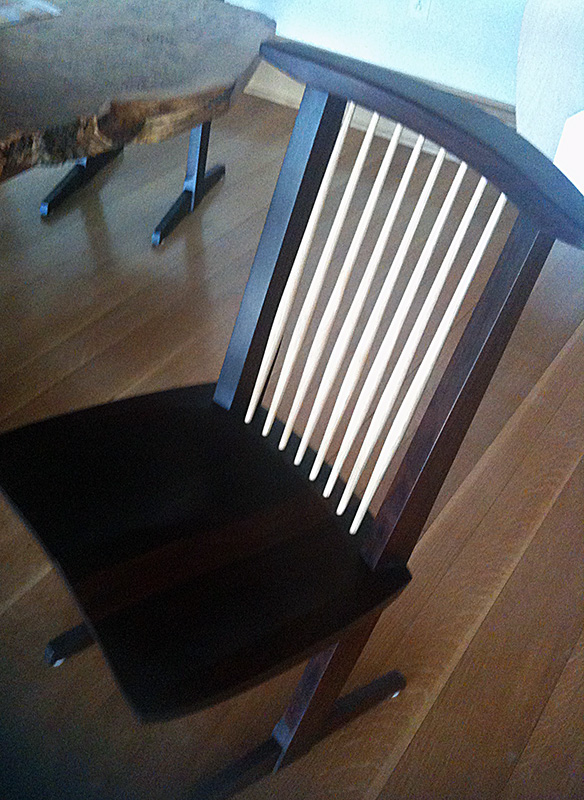
Nakashima Conoid Chair

The iconic Conoid Chair by the Nakashima Furniture Company

I need some help dear readers. As I’m outlining projects I want to build in future semesters of The Hand Tool School as well as future projects on this site I have come across a design conundrum. Technically everything I do both on this free site and my premium Hand Tool School site is in some way for profit. This site is really a marketing engine for the pay site and I also receive income (albeit small) from affiliates and Google. So if I build a project based on a modern design where the originator is still alive or at least a company maintains the design, is this unethical?

For example, I have been wanting to do some more contemporary stuff in The Hand Tool School. I would love to build a Conoid chair by George Nakashima or a Maloof style chair. Is this profiting from someone else’s design if I build it on this site? What if I build it as part of a paid semester at The Hand Tool School? Using words like “inspired by” or “in the style of” gets into some hot water too as no matter what changes I make, the source will still be obvious. Or in many cases, the original design is just right and why would I want to alter anything?
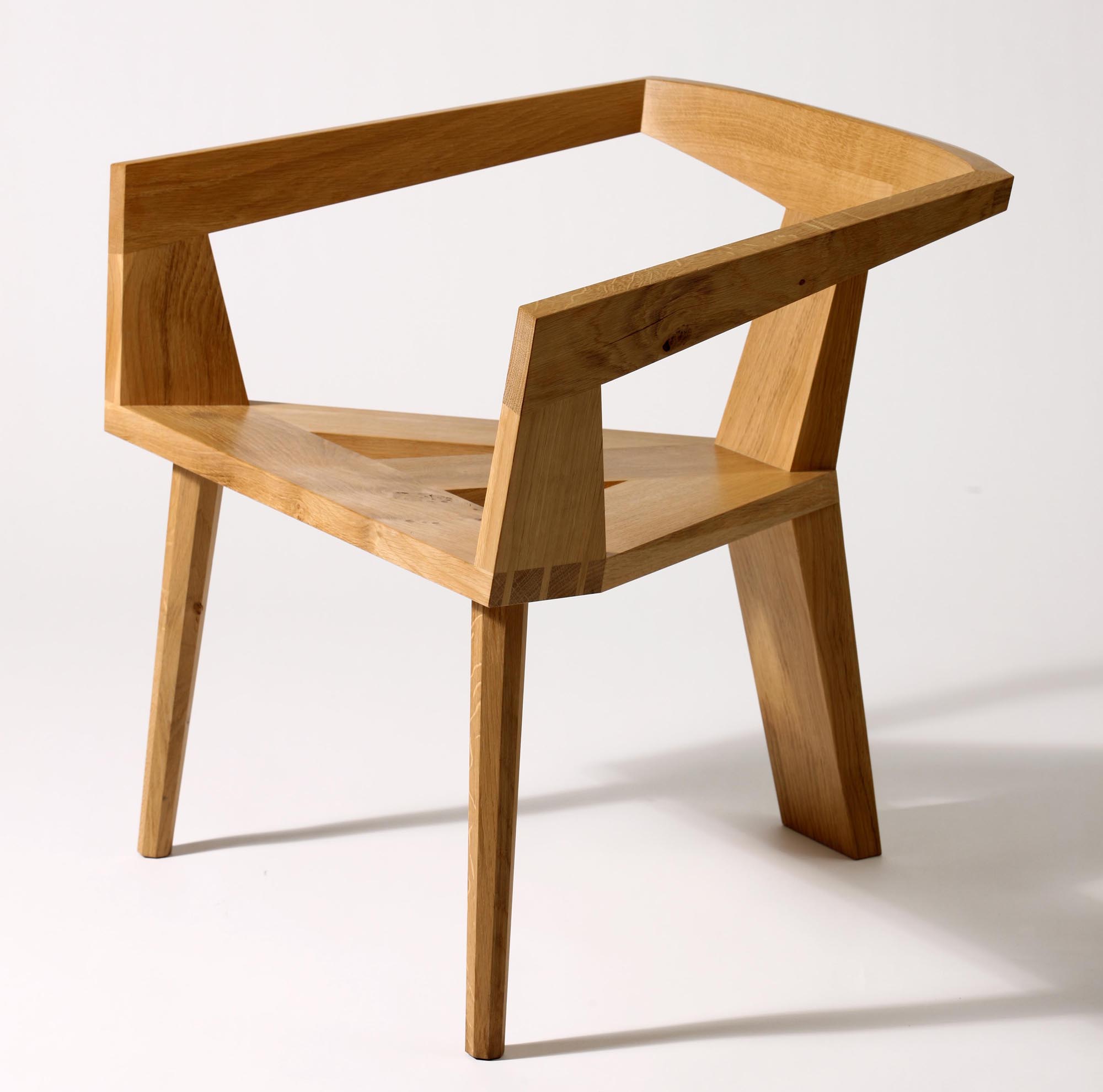
Sligo Chair

The Sligo chair by Yaffe Mays Co, http://yaffemays.com/

If I were just any old woodworker documenting one of his builds I don’t think this would be an issue. However, the Renaissance Woodworker persona and everything related to it has become its own business (and a full time job) so do I now cross a line by building a modern piece? I may be building a piece for my own use and enjoyment and not even trying to “teach” someone how to build the piece, but the fact that I broadcast it on one of my properties could be seen as profiting from the design. Of course legality is a major concern but there is also the gray area of perception. While I may be legally safe, now I’m a pariah in the woodworking community for stealing someone else’s work. I want to do the right thing but you can see how this gets a little hazy.

Your Turn

What do you think? Where do you draw the line between a direct copy and a piece “inspired by” someone else’s work?

24 Responses to “Profiting from Someone Else’s Design”

Read below or add a comment...

  1. From a legal standpoint i would seriously consider speaking to a lawyer.

    From an ethical view, I would say go for it, as you are not selling the product, but rather the skill set to build it. If still hesitant, try contacting the designer or (in the case of Maloof), the business owner with the rights to brand their work as authentic for permission.

    If you have their blessing (and I can’t see why you wouldn’t get it as it’s good exposure), then I would say you’re covered!

    • Shannon says:

      Hopefully this goes without saying, but should I end up doing something like this, I would contact the designer and get their buy in. In fact, I think an added bonus would be to involve the designer in a video chat or something to discuss their inspiration and process too. In fact I think that would be really cool!

  2. Russ Whitney says:

    It’s legal as far as I can determine. There is a good post here about it. My research has said that unless the design is “iconic” for the creator then the appearance or construction is only illegal to copy if it is patented. However, you can’t duplicate documentation (like plans) if they are copyrighted.

    But your question was about the ethics. The copyright site of the government recommends that you always ask for permission before making a derivitive work. I think that is a good rule of thumb. However, if you are unable to reach the designer then I don’t see a problem as long as it is for personal use.

    If it is for commercial use then I think it crosses the boundary. IMO, that’s not ethical.

    That’s my 2 cents.

    • Shannon says:

      Russ, I think it is the iconic stuff that really inspired this train of thought. The Conoid chair is iconic Nakashima. The Maloof Rocker, is defined by “Maloof” in the name. I’m going to start building a hall table shortly. The picture on my website is taken from Thomas Moser’s Shaker furniture book, but the design isn’t iconic; but rather, vanilla Shaker. I don’t hesitate to build this as there is no way anyone could trace provenance and tied it to an original designer. Fortunately these designs are the ones that stand the test of time and are perfect for the woodworker who wants to put his own signature on the piece.

  3. Lamar Bailey says:

    I feel that if you are taking detailed measurements or each piece like Norm used to do in Antique shops and you are reproducing it with all those detailed measurements it is a direct copy If you take some pictures and some basic measurements like overall height and length and width and create a piece from this then you are creating a piece that is inspired by another.

    • Shannon says:

      Lamar, it has probably been 6 years since I built a piece from a plan. Nowadays, if it isn’t an original design, I start with a photograph and build my plan from there by extrapolating measurements and working out my own curves. Is this still copying? More a rhetorical question than anything.

  4. Norman Reid says:

    I once decided to build a project out of a magazine and put it up for sale as a regular item. Because it had been designed by a woodworking company, I contacted them to get their permission. They asked me not to produce it for sale, as they were doing so themselves and I would be competition. They did say that if I made modifications to their design to make it my own, they would not have a problem with it. Of course, I was free to build it for my own use.

    This isn’t exactly your situation if you are only demonstrating the build and not selling the product. I’d say it falls into a gray area. However, since they have invested their careers in designing and building the pieces, they have at least an implicit copyright on it and you might be stretching ethical grounds. I would say the fairest thing to do is to contact them and ask their permission. If they approve, I’d state that on your web site so it’s clear to all involved that you did right by them.

  5. Trevor Angell says:

    Secret option B: Original Design.

    There’s plenty of original-but-Nakashima-inspired stuff floating around. Almost anything will be unique, as slabs and live-edge materials need their own unique treatment.

    If you feel limited by your own design chops, collaborate with an industrial designer to create a chair that fits the needs of your program.

  6. James says:

    Such a great question. This is both an ethical and potentially legal question. I am not an attorney, but since 1990, copyright laws protect architecture. I’m not sure if this also applies to furniture design. If it doesn’t, then it’s probably because it hasn’t come before a court yet. So that’s one consideration.

    The other consideration is harder to nail down. I personally believe it is wrong for me to recreate another artist/woodworker’s work even for personal use if a) they offer the work for purchase, and b) they don’t sell plans for the work. They are often creating art for their own livelihood. But that’s a definite gray area that not everyone will agree with. On the other hand, recreating someone else’s work for profit a definite no-no.

    The grayest area of all is work “inspired by” another artist’s design. It could be argued that almost all art is inspired by another artist’s work. As long as you use their design ideas and techniques as inspiration to create your own work, I don’t believe there is an issue. If the new work is a blatant (completely ambiguous term) rip-off then it falls under the first two considerations.

    Just my two cents.

  7. Mike Russo says:

    I used to sell musical instruments for a living. Yamaha is a huge company that did nothing but make copies of other’s designs for YEARS. At first, the copies were terrible. As time went on, the copies became better than the originals. Now they do their own thing for a number of instruments, but the copies are still being made and others are now copying them!

    I have no idea what the word of the law would be here, but there is plenty of precedent of organizations doing way worse than you are.

    Dealing with the perception issue. You are teaching someone how to cut the joints and do the shaping. You are teaching how to make the chair, not how to make a Maloof design and market it as a Maloof. I don’t think you’d have any negative perception issues.

    • Shannon says:

      There is something to this point Mike. Using the Maloof example. Having studied these chairs and studied Charles Brock’s examples as well as seeing how they cut their joinery, I know my process would be different using only hand tools. So while maybe not “original” my process would be different. Thanks for making the picture even muddier :)

  8. Mitch says:

    If you were to make something and try to pass it off as an original Nakashima, that would be wrong (at least ethically; i’m not a lawyer but it sounds like making counterfeit goods). On the other hand, making reproductions or interpretations of furniture has been a solid practice for centuries. I read a quote from Nakashima’s daughter in a book a while back where she denigrated what she called “knock-off-shima” furniture. I found that disappointing to hear, especially because Nakashima and his daughter carefully constructed a loyal following for his work, a lot of which appeared in Fine Woodworking and other places. You can’t hold someone up as an inspiration when it earns you money, then complain about people being inspired by you. That’s a long way of saying that woodworkers have always imitated other woodworkers, sometimes copying designs, sometimes copying styles, sometimes incorporating a feature or technique. It’s a great way to learn. If I borrow heavily from a woodworker’s design, I disclose that. Besides, when you make a piece of furniture, the proof is in the pudding — meaning the quality of your craftsmanship.

    • Shannon says:

      I remember reading the same thing Mitch and feeling the same way. One thing you can expect is that woodworkers will look at a piece and think, “I could build that”. One of the great joys of this craft is seeing a piece of furniture and recreating with with your own hands. Usually this results in “enhancements” along the way that spawn an entirely new design.

  9. Brian Eve says:

    Hi Shannon,

    I had a whole bunch of good ideas to input, but I see most of them have already been covered. I know exactly where you are coming from, you, as a musician, are thinking of this as you would a copyrighted piece of music. Not a bad way to look at it, ethically. If you want to learn to play guitar, you might learn “Stairway to Heaven.” That might be far different than performing that piece for profit, without permission. It happens all the time, that doesn’t make it right.

    What I would do is collaborate with some fancy designer. Offer a class (on the free side would be cool) in which the designer along with some students come up with an original design. This would be fascinating. Then, you could build the design for your school.

    Who knows, in a hundred years hobbyists could still be making the “Hand Tool School Chair.”

    • Shannon says:

      Brian, when it comes to the stuff I build in The Hand Tool School, my focus is on the techniques and I usually try to downplay the actual design elements of what I am building. Mainly because I could never make everyone happy. Design tastes vary so much from woodworker to woodworker and when you take a large sample (like my current membership) you will never agree upon the style. So my point being is that I don’t think I would ever make a “Hand Tool School design” and expect anyone to reproduce it.

  10. Ethan says:

    The only thing I’d worry about is hard legal evidence that you cannot copy something (such as the aforementioned plans that someone may have drawn up or if you’re trying to reproduce a tool that is patented or some such thing).

    If I come across some guy making boxes out of two kinds of wood with mitered corners and complementary splines, should I worry about copying his work if I make a box out of two kinds of wood with mitered corners with complementary splines? Or… has this design been done by thousands of woodworkers and it is, as Mitch puts it, really up to you to create a quality piece that will sell?

    I think you’ll be hard pressed to find many people who can prove they have the sole legal right to produce such-and-such item out of wood.

    Regarding the ethical issue… that’s really something you have to decide for yourself. Ethics are a personal moral judgement you make on yourself, as far as I’m concerned.

    • Stan P. says:

      Shannon:

      Coming in late to your post. Fascinating question. Most if not all of what I would say seems to have been said above. I too am no lawyer, but, unless the referenced pieces are patented and/or copied righted, your probably OK legally, but it wouldn’t hurt to check. From the ethical standpoint, as Ethan said, it is really something you have to decide, what are you comfortable with. When you come down to it, you are really teaching a technique or process and using their piece as a gold standard so to speak for the student to compare the results of their work to. Would you feel it was wrong to teach somebody how to play the drums and use the way Buddy Rich played as the gold standard to compare to and have them aspire to that? Maybe it’s a bad example, but it the only one I can think of right now. I would say go for it and use the best examples you can reference for the types of pieces you are making.

    • Shannon says:

      I hadn’t even thought about that Duncan. Of course other organizations are already doing this! Call it hubris that I could think that I would be the first one to want to tackle some of these cool designs.

  11. Ron Anderson says:

    What I would do is get written permission from the orginator of what you want to copy and then give credit to the orginator via “this is a copy of “?” design or “this is a copy with permission from “?”. I would also talk to your lawyer and get a legal opinion or do some research on line as I am sure you are not the onlyone who has had to go through this. Be a good discussion with Marc & Matt.

  12. Byrdie says:

    I hate coming late to the party, here’s my two cents:

    1) Your not selling a chair, you’re selling the techniques used to build it.

    2) Your not buying a set of plans, running them through your copier and then e-mailing them out free of charge to everybody in the Hand Tool School to use in the build. That would be copyright piracy.

    3) This is not music of literature and even those areas have “wiggle room” in their interpretation. Just think of all the hip hop “artists” who are sampling phrases to use in their “music.”

    4) I’m so tired of the idea that nothing ever repeats its self, that no one can ever create something that resembles something else, or that it makes a difference if the original creator is still alive or recently deceased.

    Finally 5) Think of the artist who reproduce the artwork of great masters. There’s a significant market for it. The only place it crosses a line is when they make an effort to defraud others by selling it as the original, going so far as to use old materials and the like.

    As long as your aren’t taking a set of Maloof (or whomever) plans and using them to create a product that you then intend to market as having been crafted by the original artist I don’t see a legal, moral OR ethical question at all.

  13. Greg Palmer says:

    Shannon: I know I’m really late on this thread here, but I was listening to your podcast where you were talking about this (specifically the Charles Brock plan) with the gang and thought I’d chime in. Whatever you do, it’s going to be inspired by another style of furniture. If you’re going to build something from a plan then unless you are blatantly giving away a significant amount of the information that you purchased, you should be fine. In fact, I believe you will create enough press and business for the plan you are creating they won’t mind. They will probably even be flattered that you would choose their plan from the millions available. Bottom line is, do as much up front as you can to get permission and give all the credit to the designer and you have no worries. I look forward to seeing what you decide to build.

Share Your Thoughts

*

You may use these HTML tags and attributes: <a href="" title=""> <abbr title=""> <acronym title=""> <b> <blockquote cite=""> <cite> <code> <del datetime=""> <em> <i> <q cite=""> <strike> <strong>